UX design analysis made simple for designers and product owners
Year
2022
Industry
UX Analytics
About the project
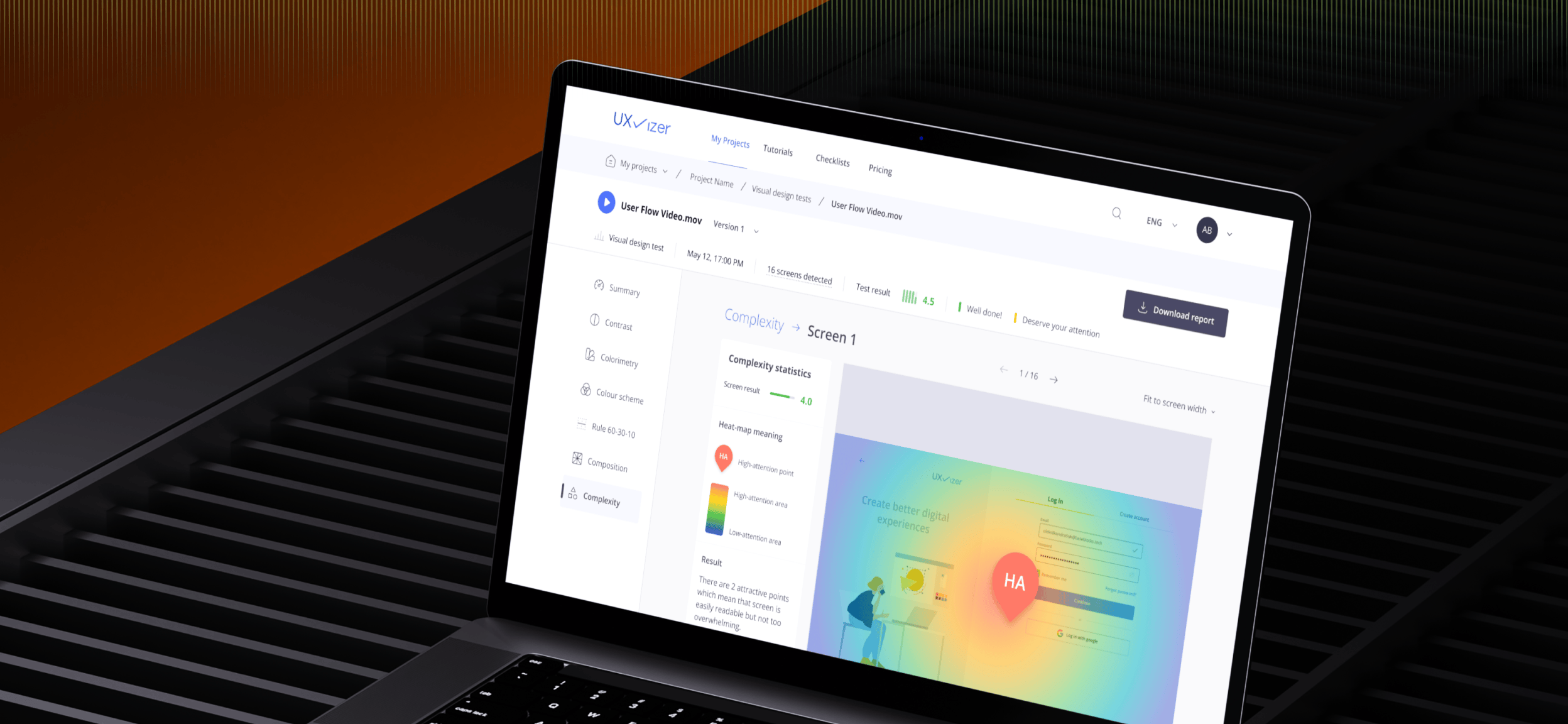
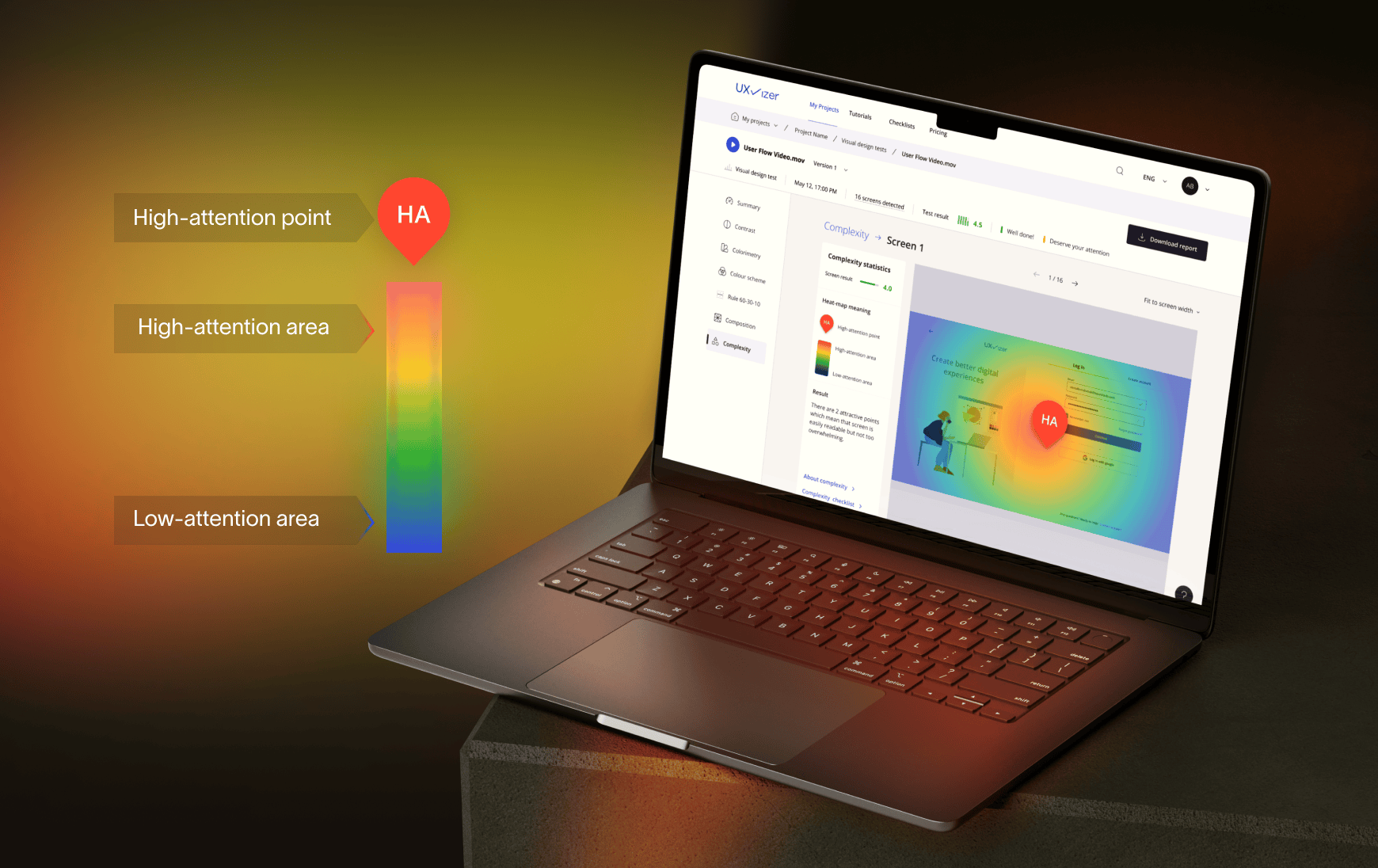
UXvizer is an analytics platform for digital designers and product owners, built to check visual design accessibility and analyze user journeys from user flow testing videos and product screens. It helps designers find weaknesses in their product's design, get recommendations for fixing them, and track their progress over time.
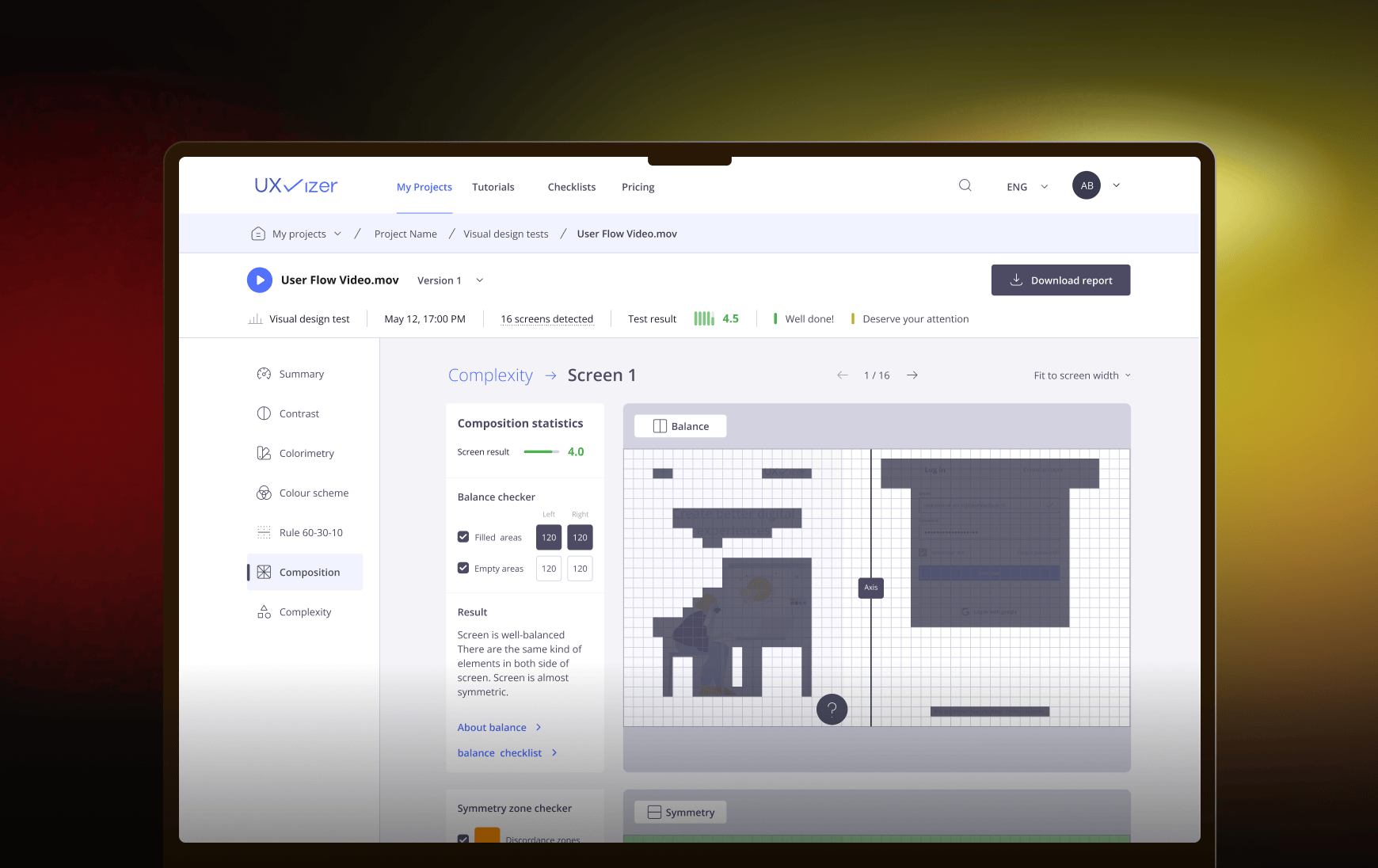
The platform gives users quick access to their projects and files through a clean interface, with a UX journey designed so designers see insights and improvements about their designs clearly and logically. Behind the interface, AI analyzes the underlying data, continuously updating the insights designers see.
UI/UX design
Development
Problem
UXvizer set out to give digital designers and product owners a fast, systematic way to check their design's accessibility and understand how users actually move through their product—without relying on manual review of scattered testing videos.
Before UXvizer existed, designers faced significant challenges:
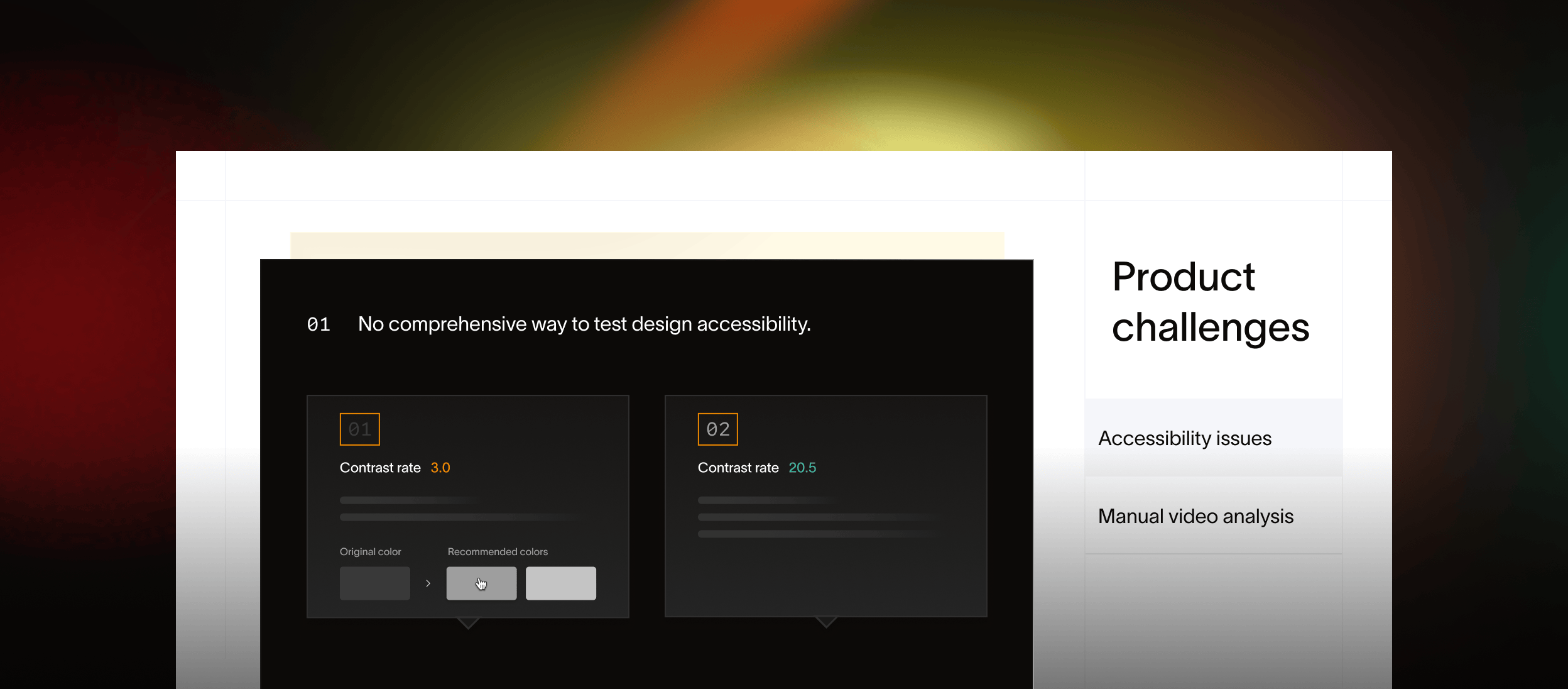
No comprehensive way to test design accessibility. Existing tools checked only some aspects of visual design, leaving designers without a full picture of accessibility issues across all the metrics that mattered.
User journey insights buried in raw footage. User flow testing videos held valuable insight into how people actually used a product, but turning hours of footage into clear findings was slow and manual.
Our process
We partnered with UXvizer to build an analytics platform for visual design accessibility and user journey analysis, following our proven Product Ladder model.
Product foundation: built a stable, scalable platform
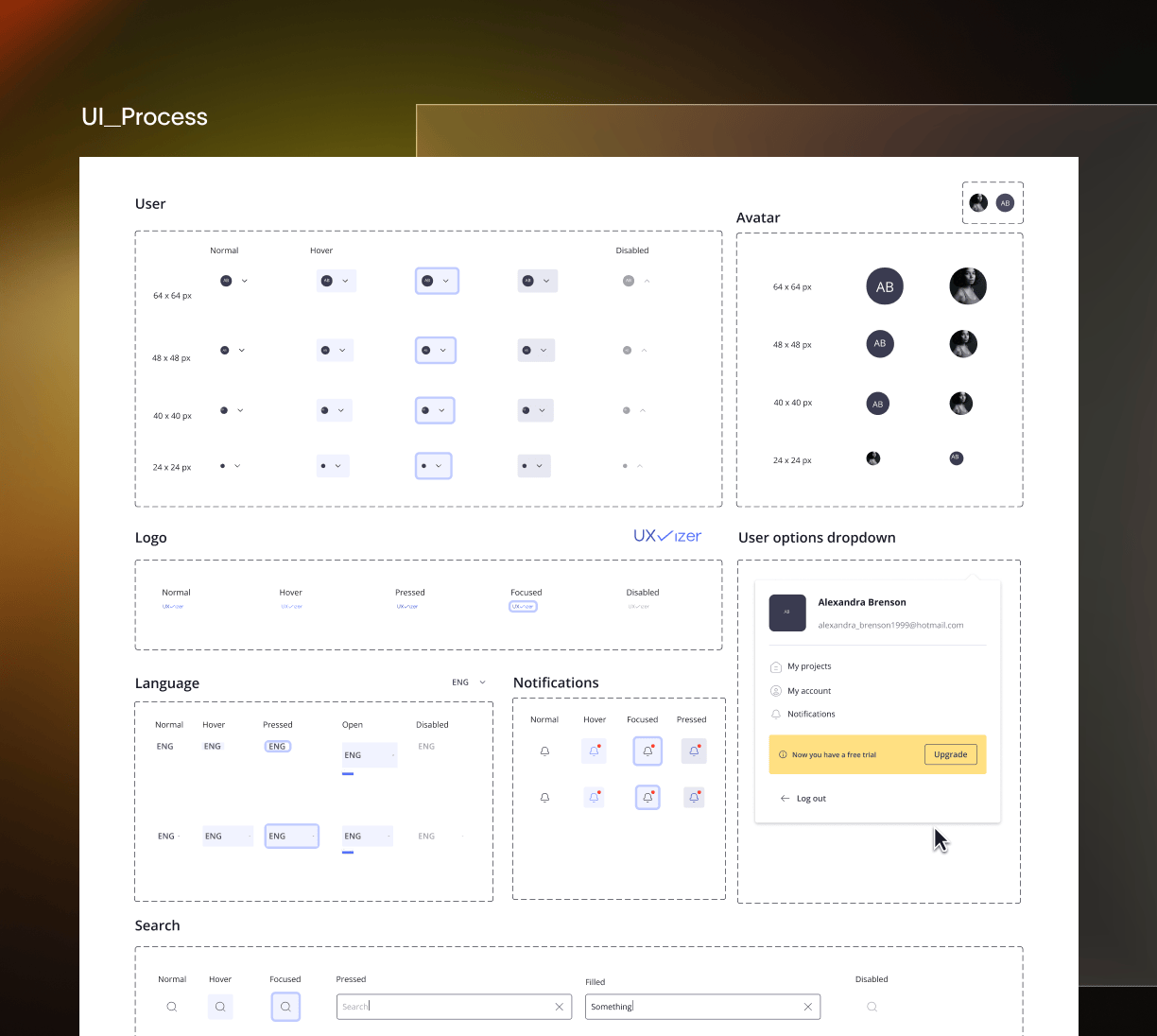
Building on an existing MVP, we improved the interface and UX based on feedback from real users. Using a micro frontends framework, we reused the functionality that already worked while evolving the experience around it, with Firebase acting as a single source of truth connecting the interface to AI-generated data.
What we built
01
UX analytics platform for designers and product owners
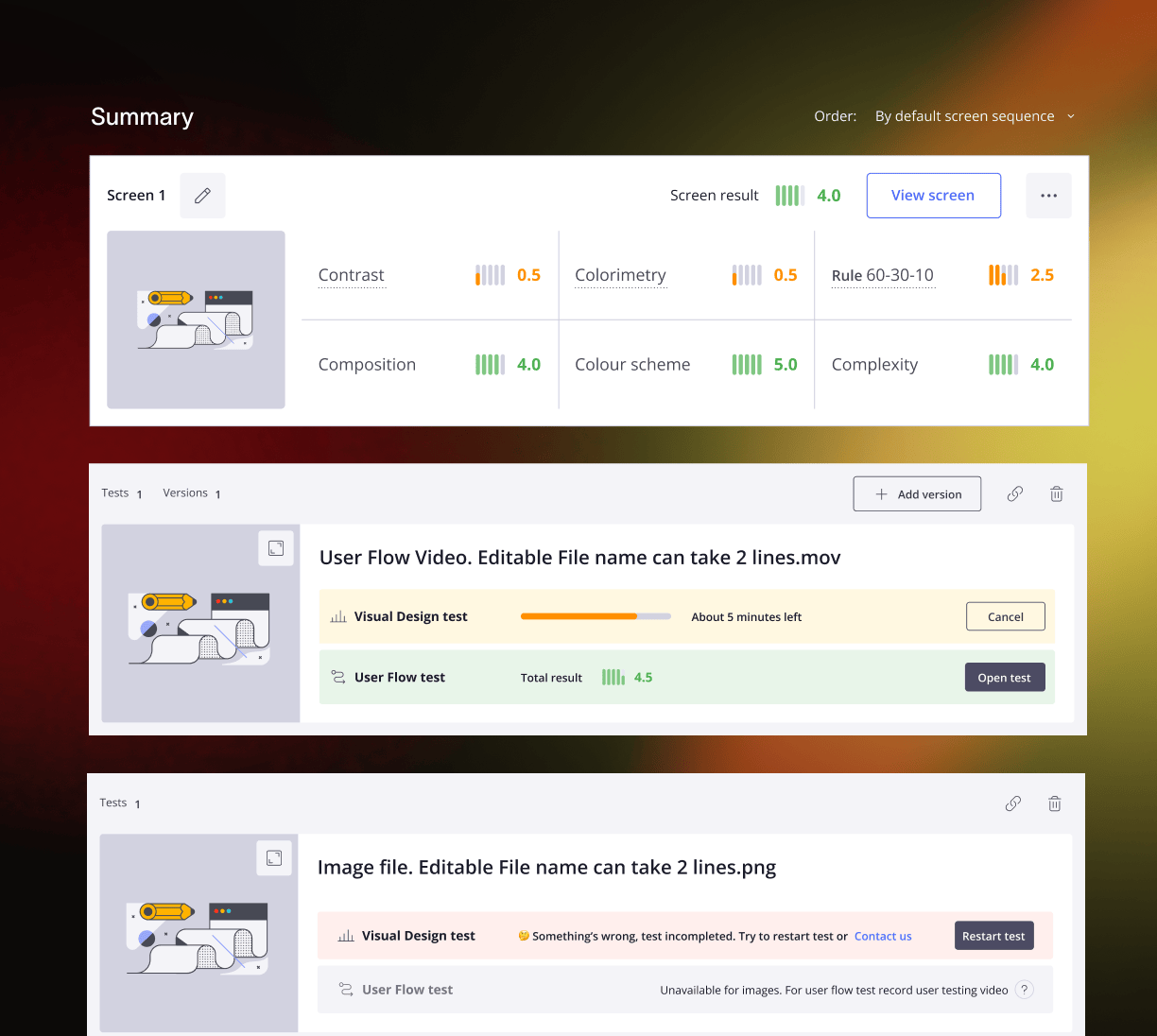
UXvizer gives designers and product owners two core ways to improve their work: Visual Design Testing to check accessibility, and User Path Testing to understand how users actually move through a product. The interface gives quick access to projects and files, with a UX journey designed so designers see insights and improvements clearly as they work — helping them find weaknesses, get recommendations, and track progress over time.
02
Backend & infrastructure
Built with React and a micro frontends framework, the platform reuses functionality from the original MVP while evolving the interface with new, simplified UX. Firebase acts as a single source of truth, connecting the interface with data generated by AI running underneath — the AI handles the analysis, while Firebase keeps what designers see always up to date. The whole system runs on Google Cloud.
Results
UXvizer turned manual, video-based design review into a systematic way for designers and product owners to check accessibility and understand user behavior.
By combining Visual Design Testing and User Path Testing in one interface, UXvizer gives designers a clear path from finding a weakness to fixing it and tracking whether the design actually improved. Reusing functionality from the MVP through a micro frontends framework let the team evolve the interface without rebuilding what already worked, while Firebase kept the AI-driven analysis and the interface reading from the same source of truth. The result is a platform where AI handles the underlying analysis, and designers get insights that are quick to access and easy to act on.
Our approach
Improving UXvizer meant refining an existing interface on top of functionality that already worked — reusing what existed from the MVP while giving designers a clearer, more intuitive way to reach their insights. Our team stayed involved from the initial planning through interface design to the engineering work connecting it with the AI running underneath, working closely with UXvizer to keep every decision aligned with what designers actually needed.
Given the platform's reliance on AI-generated data and a modular frontend architecture, we chose a technology stack built to keep the interface fast, consistent, and easy to extend.





.png)
.png)